
My youthful optimism might have been somewhat tarnished by my first encounter with significant auditory problems. But, I was still largely functional. I don’t remember that period as being one in which I was hard of hearing.
On the other hand, it was a period of transition for me. I was leaving graduate school, the friends, colleagues and teachers I had known for up to six years. I was to take up a post-doctoral fellowship the following year at another university.
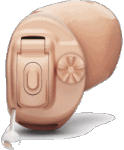
During the six months following my graduation, I was fitted with a hearing aid in the left ear and I prepared for a stapedectomy in my right ear.
My father, who also had hearing difficulties, seems to have been finally pushed by my own experience to do something about his hearing problems. That summer, while waiting to move to my new university, I lived with my parents.
My father and I would go together to the doctor he found in the city, a doctor supposed to have been at the top of his field.
My father grew up in the city but had never visited the many touristy places in town—places of world renown. So, together we would go see the doctor, have lunch and visit many of these famous monuments. It was a period in my life where my relationship with my father was unlike any other period. I look back at the period with special fondness.
The day we were both fitted with our first hearing aids, we took the subway downtown. The tremendous roar of the train as it came into the station was completely unexpected. This was my first experience with that noisy world that sometimes causes people to reject the wearing of their hearing aid. The problem, of course, is that the hearing aid I wore (an analogical device, typical of the period), did not discriminate between amplifying the sounds I wanted to hear and the sounds that disrupt what I wanted to hear.
And so, I was disabused of the idea that my hearing was OK. It was not. I really needed the help that a hearing aid could bring.
In any case, I was optimistic about the upcoming stapedectomy which, according to the doctor, restores normal or near-normal hearing in over 90% of the cases. Really good odds, no?